
Getting started
60 voice journaling prompts to say out loud
60 voice journaling prompts written to be said in a minute: quick starters, evening unloads, anxious days, weekly patterns and days with nothing to say.
In this guide
- What makes a good voice journaling prompt?
- What can you say in a one-minute voice journal?
- What should you talk about at the end of the day?
- What can you journal about on an anxious day?
- How do you notice patterns in a voice journal?
- What do you say when there’s nothing to journal about?
- What are gratitude prompts that don’t feel forced?
- What should you talk about on a long walk?
- How do you use voice journaling prompts?
What makes a good voice journaling prompt?
One you can answer in one breath, that leads somewhere, and that sounds like a question a friend would ask. Most prompt lists were written for a pen, and out loud they produce a sentence and a silence.
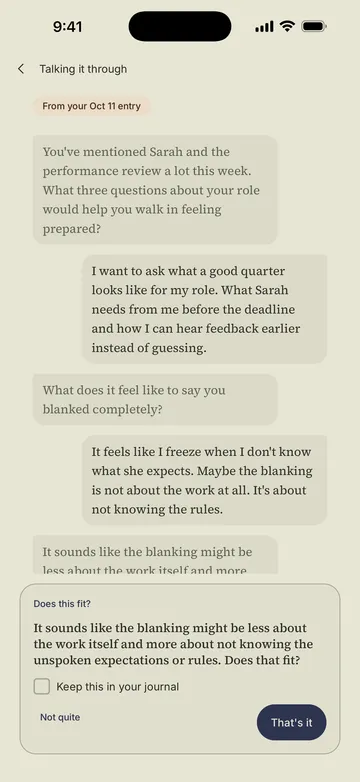
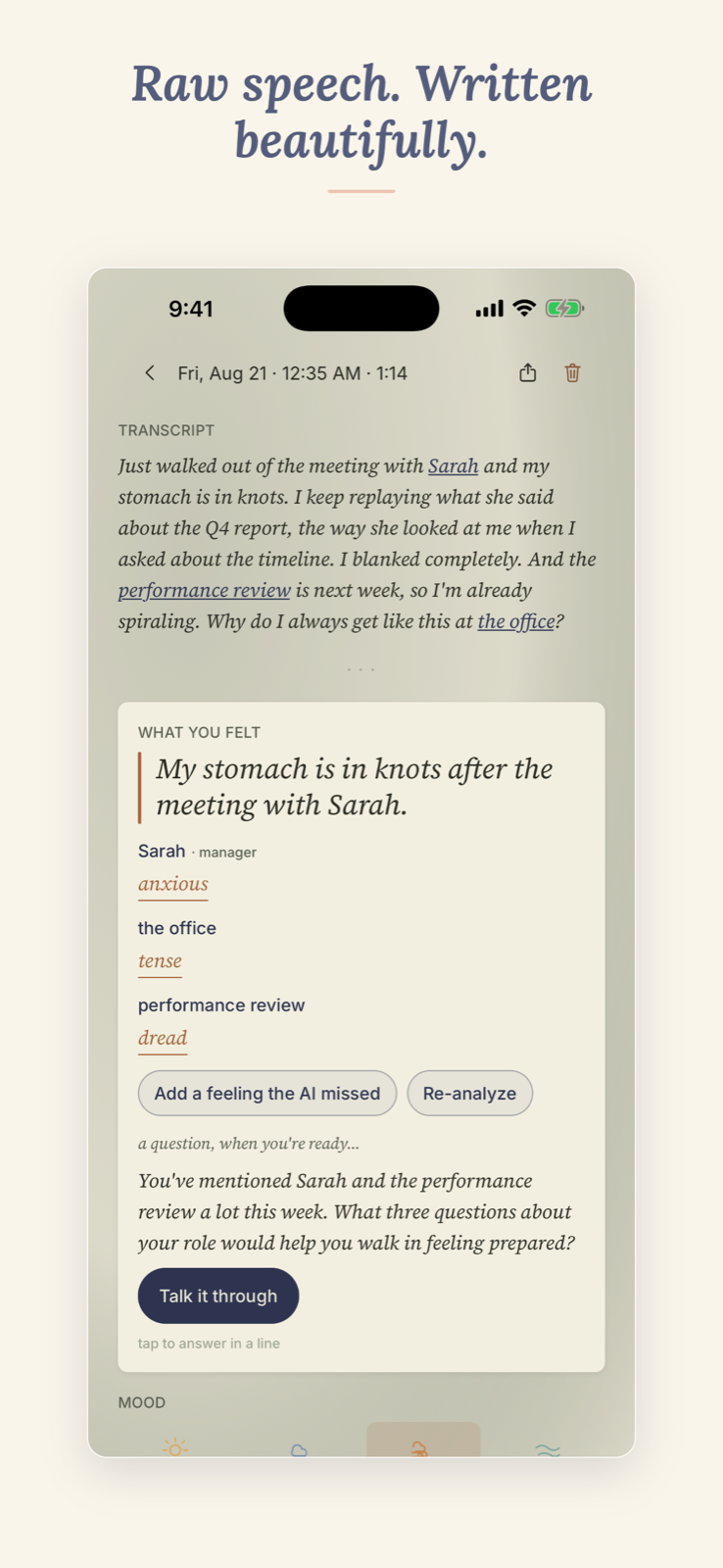
Everything below was written to be said into a phone, and tested that way. Pick one, tap record, talk for a minute. If you use a voice journal like Dearly, the app writes the page and, over time, shows you what you keep coming back to.
What can you say in a one-minute voice journal?
Any of these ten. Each one is answerable in a breath, so a minute is enough to answer it and keep going.
- What’s the one thing on my mind right now, in one sentence, and then why?
- What did today actually consist of? Just list it.
- What am I avoiding saying?
- If someone asked “how are you, really”, answer it.
- What was the best ten minutes of today?
- What’s the sentence I keep repeating in my head?
- What do I need tomorrow that I didn’t have today?
- Finish this: “I’m tired of…”
- Finish this: “I’m glad I…”
- What would I tell a friend who had my day?
What should you talk about at the end of the day?
The day itself, from waking up, and whatever you carried home. These ten walk you through it.
- Walk through the day from waking up. Don’t skip the boring parts: they’re where the mood hides.
- What did I carry home from work that isn’t mine to carry?
- Who did I talk to today, and which conversation is still running in my head?
- What did I do today that I’d do again?
- What went differently than I expected?
- Where did the time actually go?
- What am I not going to be able to fix tonight? Say it so I can put it down.
- What’s one thing I want to remember about today in a year?
- What did my body feel like today?
- Tomorrow: the one thing that matters, and the one thing I’m dreading.
What can you journal about on an anxious day?
These aren’t a treatment for anything; they’re a way to get the loop out of your head and into words, where you can look at it.
- Say the worry out loud, exactly as it sounds in my head. Then say it again, slower.
- What’s the worst version of this I’m imagining? What’s the likely version?
- What do I actually know, and what am I filling in?
- When did this start today? What was I doing?
- Has this worry shown up before? What happened then?
- What’s the part of this that’s in my control, and the part that isn’t?
- What would “enough” look like right now, not fixed, just enough?
- Who could I say this to, and why haven’t I?
- What would I say to someone I love who was thinking this?
- If I do nothing about this tonight, what happens?
How do you notice patterns in a voice journal?
Reread a week of entries, then say these. If you use Dearly Pro, read its summaries first.
- Who came up most this week? Why them?
- What word or feeling keeps appearing?
- What tends to follow what? (“When X happens, I usually…”)
- What did I say I’d do last week, and did I?
- Which day was best, and what was different about it?
- What am I pretending is fine?
- What’s changed since a month ago that I haven’t acknowledged?
- What do I keep putting off, and what’s the real reason?
- What did I enjoy that I didn’t plan?
- If this week were a weather report, what would it be?
What do you say when there’s nothing to journal about?
Something small and concrete: the room you’re in, what you ate, what annoyed you. Start there and see where it goes.
- Describe the room I’m in right now, out loud, in detail.
- What did I eat today, and what did I want to eat?
- What’s a small thing that annoyed me? Be petty.
- What song is in my head and when did it get there?
- What did I see today that I’d have photographed if I’d had time?
- What’s something I’ve been meaning to look up?
- Tell the story of a small mistake from this week.
- What’s the most recent thing that made me laugh?
- What am I looking forward to, even slightly?
- Say what “nothing to say” actually feels like. That’s the entry.
What are gratitude prompts that don’t feel forced?
Ones that ask what worked, not what you’re thankful for. For ten more, see gratitude prompts to say out loud.
- What went right today that I’d normally not notice?
- Who made today easier, even a little?
- What do I have today that I wanted a year ago?
- What worked (an object, a tool, a routine) that I take for granted?
- What did I get to skip today?
What should you talk about on a long walk?
The bigger questions, the ones that need more than a minute.
- What do I want more of, and what would I have to give up to get it?
- What am I good at that I don’t give myself credit for?
- What do I believe about myself that might just be old?
- What would this year look like if it went well?
- What’s the thing I’d say if I knew no one would ever hear it? Say it anyway; it’s your journal.
How do you use voice journaling prompts?
One prompt, one minute, then keep talking past your first answer.
- One prompt, one minute. Don’t try to answer five. Depth comes from going past the first sentence on one question.
- Answer, then keep talking. The prompt is the doorway; the entry is what you say after you’ve answered it.
- Let it ramble. A good voice journal cleans up the page; your job is to say the true thing, not the tidy one.
- Reread weekly. Or let the app do it: Dearly’s Pro summaries name the mood under each entry and surface patterns, so the “noticing” section above is partly done for you, and its reflection questions come from your own words rather than a list like this one.
Related: the complete voice journaling guide · journaling when you hate writing · year end reflection questions · travel journaling prompts · Dearly, the voice journal.