
Getting started
Journal prompts for work stress, said out loud
Journal prompts for work stress you can say in one minute on the way home, in four parts, plus a two-week reread that shows what keeps following you.
In this guide
What should you journal about when work is stressing you out?
Say four things, in this order, in about a minute: what happened, what you are actually feeling about it, the one thing you will do about it, and something that went fine. Unload first, then name it, then make one move, then close. The prompts below are grouped under those four parts so you never have to think about what comes next.
The order matters more than the exact words. If you only vent, the day replays on a loop. If you jump straight to fixing it, the feeling is still sitting there at dinner.
Why say them instead of writing them?
Saying prompts out loud fits work stress better because it shows up on the commute, not at a desk: the walk to the car, the platform, the ten minutes before you walk in the front door. Nobody opens a notebook in a car park. Most people can talk for a minute, though, and that minute is enough.
Speaking also skips the part where you edit yourself. A written entry about your manager turns careful. Said out loud, it comes out as it is, and that version is the useful one when you read it back later. If writing has always been the reason your journals stopped, how to journal when you hate writing covers that in more depth.
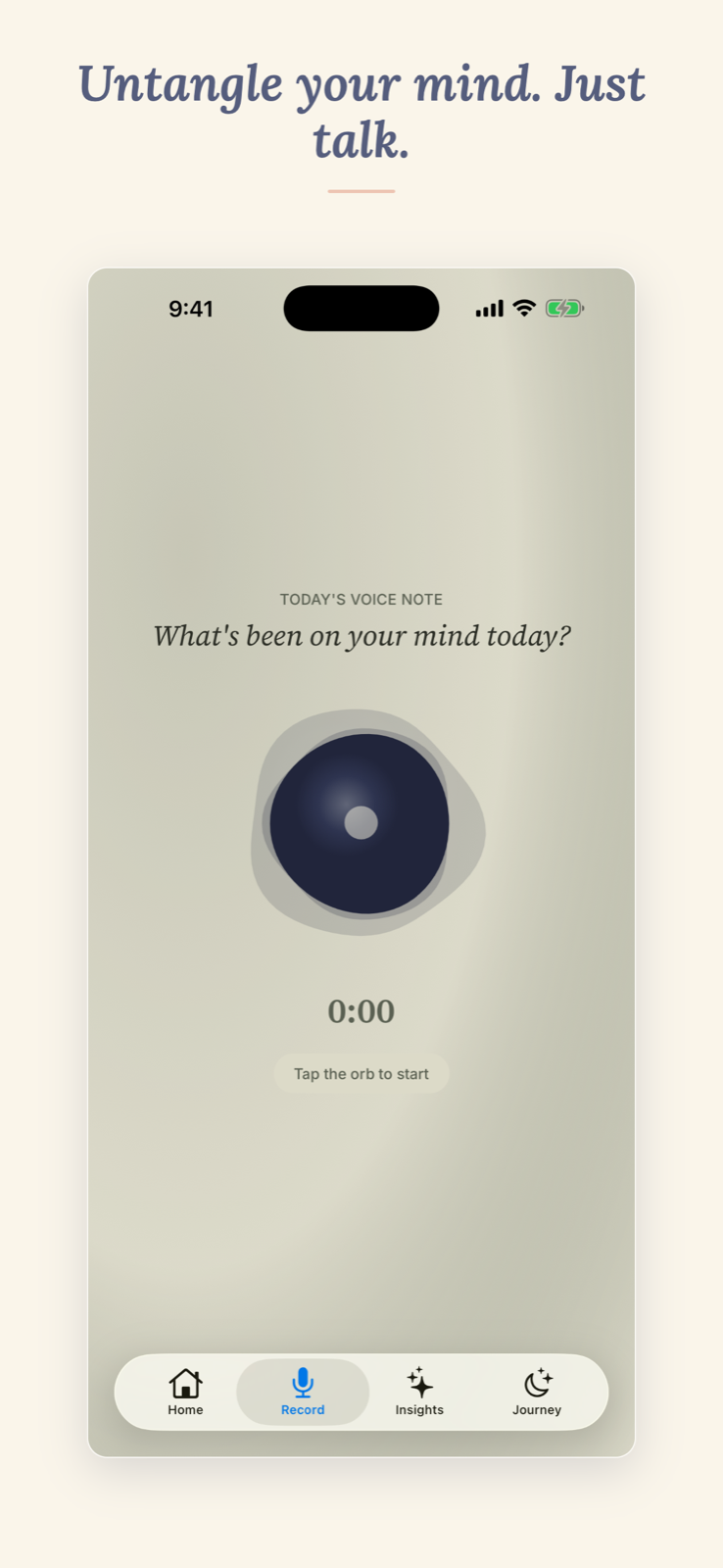
Prompts for the commute home
Use one prompt from each of the four parts (unload, name it, one move, close) for about a minute in total. Say it out loud. Stop at a minute even if you are mid-thought; you can always come back to it tomorrow.
1. Unload (about 20 seconds)
- What happened today that I am still carrying?
- What did I want to say in that meeting and didn’t?
- What is the thing I keep replaying?
2. Name it (about 15 seconds)
- What am I actually feeling: angry, embarrassed, worried, or just tired?
- What am I assuming about this that I don’t know for sure?
- Is this about today, or about something that keeps happening?
3. One move (about 15 seconds)
- What is one thing in my control here, however small?
- What would I tell a colleague to do in my place?
- What can wait until tomorrow without anything getting worse?
4. Close (about 10 seconds)
- What went fine today, even slightly?
- Who was decent to me today?
- What am I doing tonight that has nothing to do with work?
Prompts for specific kinds of bad days
Some days need a sharper question than the general ones. Use one of these as your “unload” prompt, then carry on with parts 2 to 4.
- After a hard meeting: What was said, what did I hear, and are those the same thing?
- A difficult manager: What did they ask for, and what do I think they actually need?
- Too much on the list: If I could only finish one thing this week, which one?
- Feeling invisible: What did I do this week that nobody saw?
- Sunday night dread: What exactly am I dreading about tomorrow, by name?
- After a mistake: What happened, what would I do differently, and what is already done and can’t change?
- Considering leaving: What would have to change for me to want to stay?
How do you find what keeps stressing you at work?
Reread two weeks of entries in one sitting and look for repeats. One entry is a vent. Ten entries side by side show which meeting, which person and which kind of week keep coming up.
Ask these five questions while you reread:
- Which name or project shows up most often?
- Which day of the week has the worst entries?
- Which worries came true, and which never happened?
- Which of my “one moves” did I actually do?
- What is one thing I would change if I trusted these entries?
This is where a spoken journal needs to become text. Nobody relistens to two weeks of audio, but everyone can skim two weeks of short paragraphs in five minutes. Dearly writes each spoken entry down as you finish it, so the reread is just reading. The free plan includes unlimited recording and 10 transcriptions a day, and every entry is kept as dated text you can scroll back through, which is enough to answer question 1 by hand. Dearly Pro adds patterns, which point out what tends to come up together (for example, “when work comes up, worry tends to follow”), and your cast, the people, places and topics that keep appearing in your entries.
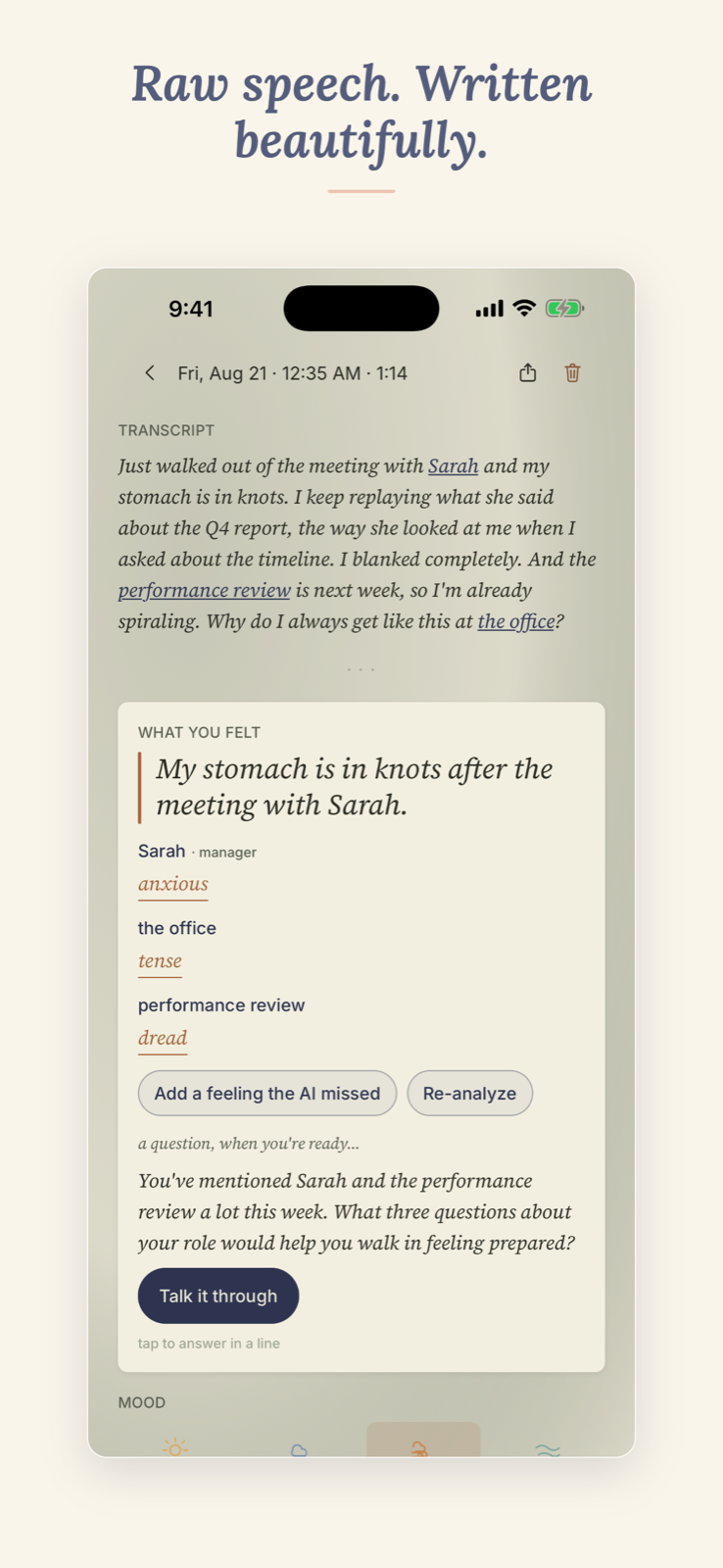
If one person or one meeting sits at the top of that list every fortnight, you have something concrete to take to them, to your manager, or to your own plans.
Make it a habit without making it a chore
Tie the minute to something you already do on the way home. Starting the car, tapping out at the gate, or the last corner before your street all work.
Keep the ceiling at one minute for the first two weeks. It is easier to keep a habit that feels too small than one that feels like homework. If your evenings run late and the stress shows up at bedtime instead, the brain dump prompts to say out loud at night are built for that moment. For the full practice, from first entry to rereading, see the voice journaling guide.
When is journaling not enough?
Journaling helps you notice what is going on and decide what to do about it. It is not a treatment. If work stress is affecting your sleep, your health or how you treat the people around you for weeks at a time, talk to a doctor or a mental health professional. Your entries can still help there: they are a dated record of what has been happening, in your own words.
Dearly is a voice journal for Android and iPhone by BroooApps. Free plan: unlimited recording, 10 transcriptions per day.